
Table of contents
For most of my life, I've had a timeline in my head.
By this age, I should have built the company.
By this age, I should have built the family.
By this age, I should know where home is.
And surely, by 40, I should have figured myself out.
But today, as I sit here writing this, the truth is almost the complete opposite.
I don't have it figured out.
For a while, I thought I did. I thought I was moving in the right direction—that eventually, all the pieces would come together and the path would make sense.
But right now, I feel completely lost.
At 40, I'm still trying to understand where I'm going, where home is, and what any of this is supposed to become.
And it isn't because I haven't tried.
By most external measures, I'm capable. I've worked alongside some of the smartest CEOs in the world. I've helped take products from zero to more than 50 million users, and I've built teams from the ground up.
I've learned how to solve hard problems, lead people, adapt, and execute.
I've also spent much of my life crossing borders and cultures. I was born in India, and I've travelled extensively across Asia, Europe, North America, Central America, and the Middle East.
I've seen many different ways of living, working, and finding meaning. But I've never quite found the one place that feels unquestionably like home.
So I'm not short on experience, exposure, ambition, or effort.
I work hard.
I work smart.
And I'd like to think I know at least a little.
But that may be the most humbling part of all.
For everything I've learned about building products, building teams, and solving problems, I still haven't figured out how to make life follow my plans.
No matter how intelligently I prepare, how hard I work, how far I travel, or how badly I want something, none of it guarantees the outcome.
There have been failed businesses. Failed ideas. Relationships that didn't become what I imagined. Places I thought would become home, but didn't.
And each time, I kept thinking:
This is it. This is finally the thing.
Then life would change the plan.
Again.
Invisible Deadlines
Recently, I read something from Swamiji that stopped me.
He was talking about how we don't just desire things—we decide when they should happen.
We create invisible deadlines, and then we suffer when life doesn't meet them.
I realised that is exactly what I've been doing.
Even spiritually.
I say I have faith. I say I surrender. But underneath, there is still that quiet negotiation with God.
Okay, I surrender—but preferably by next year.
It makes me laugh.
But it's also true.
Kailash Is Teaching Me
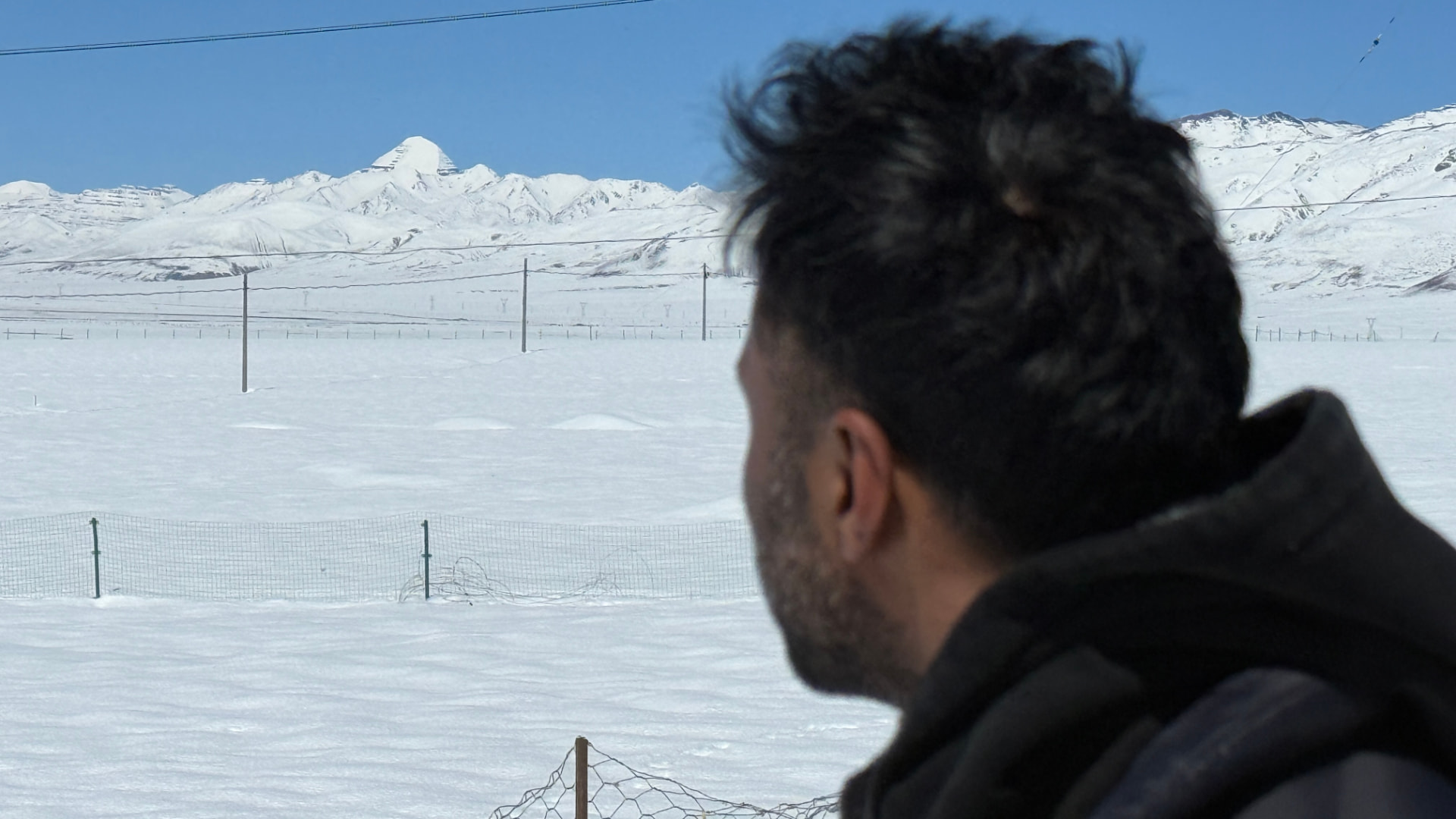
Right now, Kailash is teaching me this lesson in real time.
When we first started planning this journey, close to 30 people had committed to coming. Deposits were paid. Plans were made.
Then disaster struck near Nepal and the Tibet border.
Routes changed. Circumstances changed. Things happened that none of us could control.
Slowly, a group of 30 became 14.
I've been sitting with that.
Thirty people wanted to go.
Thirty people had decided to go.
But wanting and deciding are not the same as controlling what unfolds.
Kailash is Shiva's home. There is a belief that you don't simply decide to go—you go when you're called.
I used to hear that almost like poetry.
Now, it feels very literal.
We can prepare. We can act. We can do everything within our power.
But nature, timing, grace—call it what you will—still has the final say.
I don't want to pretend I know why some people are still coming and others aren't. I don't want to turn other people's circumstances into a tidy spiritual lesson.
But I can see how clearly life keeps reminding me:
Our plans have limits.
Nature rearranges things without asking for our permission.
The Man on the Train
There is a story from Swamiji that I keep coming back to.
He tells of a man travelling by train who falls asleep and is robbed of everything he has.
When the man wakes up, he doesn't collapse under the weight of what happened. He accepts the reality in front of him and continues with whatever remains.
Not because losing everything was pleasant.
Not because it was fair.
But because fighting the reality of what had already happened would only add more suffering.
That story hits me hard.
Because I keep catching myself saying, I surrender, while still holding on to how I want life to look—and when I want it to happen.
True surrender isn't passive.
It doesn't mean giving up, refusing to act, or pretending not to care.
It means active acceptance.
It means doing your best without pretending you control the outcome.
We Are All Passengers
Swamiji offers another image that brings this home.
Imagine you're on a train.
You may be the most powerful person in the country. You may know the driver. You may have every credential, connection, and reason to be in a hurry.
But none of it can make the train move faster than it is meant to move.
Nature moves at its own pace.
We are all passengers on that train.
Our urgency does not change its speed.
Our credentials do not earn us a faster journey.
Our plans do not rewrite its timetable.
We can prepare for the journey. We can take our seat. We can stay awake and pay attention.
But we cannot force our arrival.
I have the words faith, surrender, and believe tattooed on my skin.
But I'm still learning what those words really ask of me.
Maybe the lesson isn't to stop dreaming.
Maybe it isn't to stop preparing, working, or giving life everything we have.
Maybe it is simply to stop bargaining with life.
To stop treating delay as denial.
To stop believing that because something hasn't happened yet, something must have gone wrong.
And to trust that what is meant for us will arrive in its own time.
Not a Moment Sooner
Not a moment sooner.
Not a moment later.
God's timing is perfect.
Never early.
Never late.
Always on time.