Table of contents
- 01When Success Stops Being Enough
- 02The Words That Found Me
- 03The Horseman
- 04Krishna Did Not Remove the Battlefield
- 05The Invisible Battles We All Fight
- 06The Greatest Battle Is Within
- 07Suffering Can Harden Us or Open Us
- 08Becoming a Life-Giving Sun
- 09Direction, Not Perfection
- 10Maybe We Are All Standing on Kurukshetra
- 11Questions I'm Sitting With
There comes a moment in life when achievement stops answering the deeper questions.
You can build companies.
Run marathons.
Make money.
Travel the world.
Earn recognition.
Reach goals you once thought would change everything.
And still find yourself lying awake at night asking:
Who am I becoming?
I have asked myself that question more times than I can count.
For years, I believed freedom was something you earned.
One more company.
One more milestone.
One more finish line.
One more mountain.
I thought the next achievement would finally give me the peace I was looking for.
But every time I reached one mountain, I found another waiting behind it.
Eventually, I had to admit something to myself.
I was not only searching for success.
I was searching for peace.
When Success Stops Being Enough
For most of my life, I understood progress through achievement.
Build something.
Improve it.
Grow it.
Finish the race.
Reach the summit.
Move on to the next challenge.
That mindset gave me strength.
It helped me build companies, endure difficult seasons, take risks, and keep moving when things became uncomfortable.
I am grateful for that part of me.
But ambition can carry you a long way without ever telling you whether you are travelling in the right direction.
You can become very good at climbing and never ask why you chose the mountain.
You can spend years building a life that looks successful from the outside while feeling increasingly distant from yourself.
My questions began to change through failure, uncertainty, long runs, physical pain, prayer, pilgrimage, and moments of silence when there was nowhere left to hide from my own mind. You can read more about my journey and the path that shaped these questions.
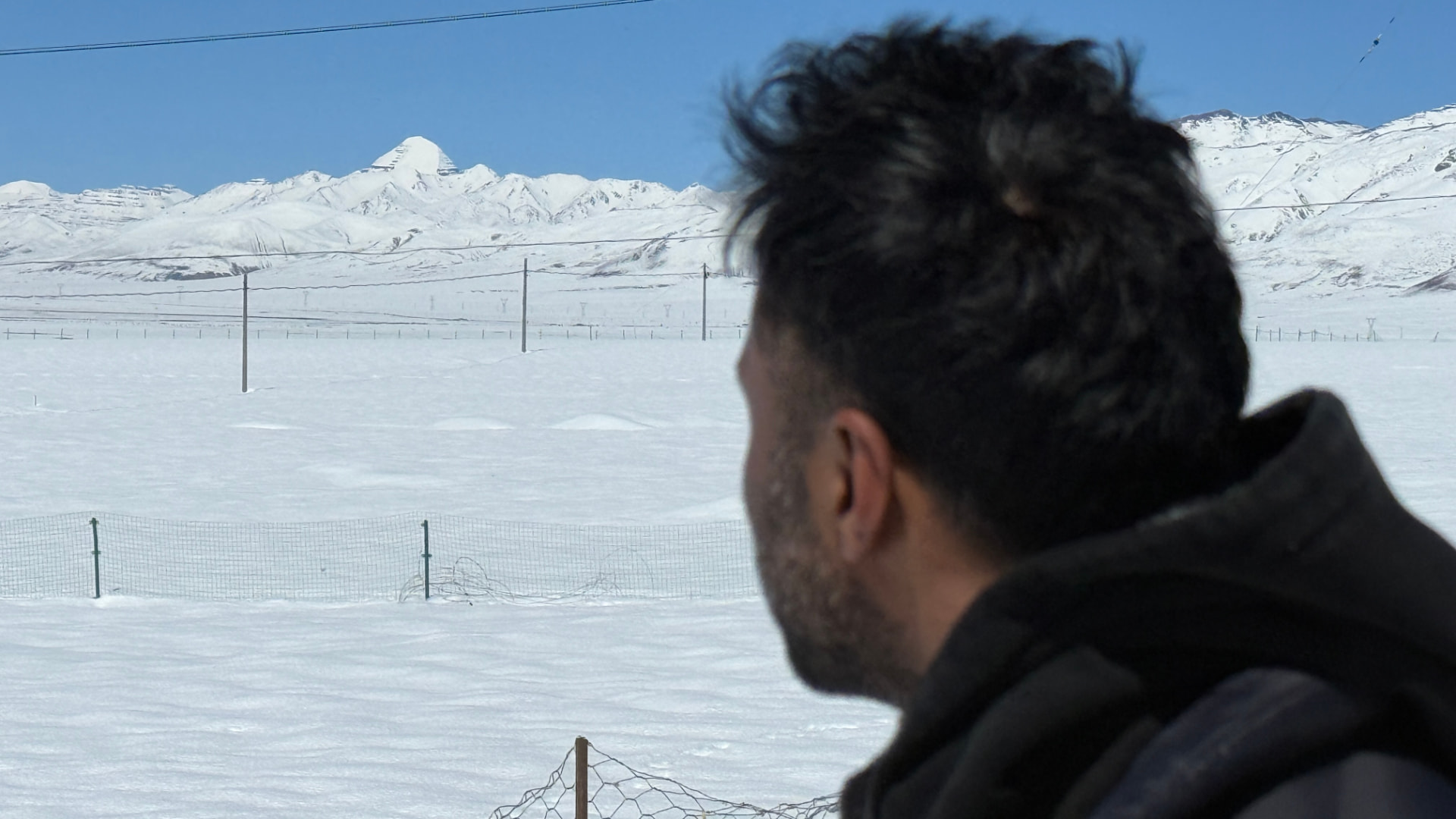
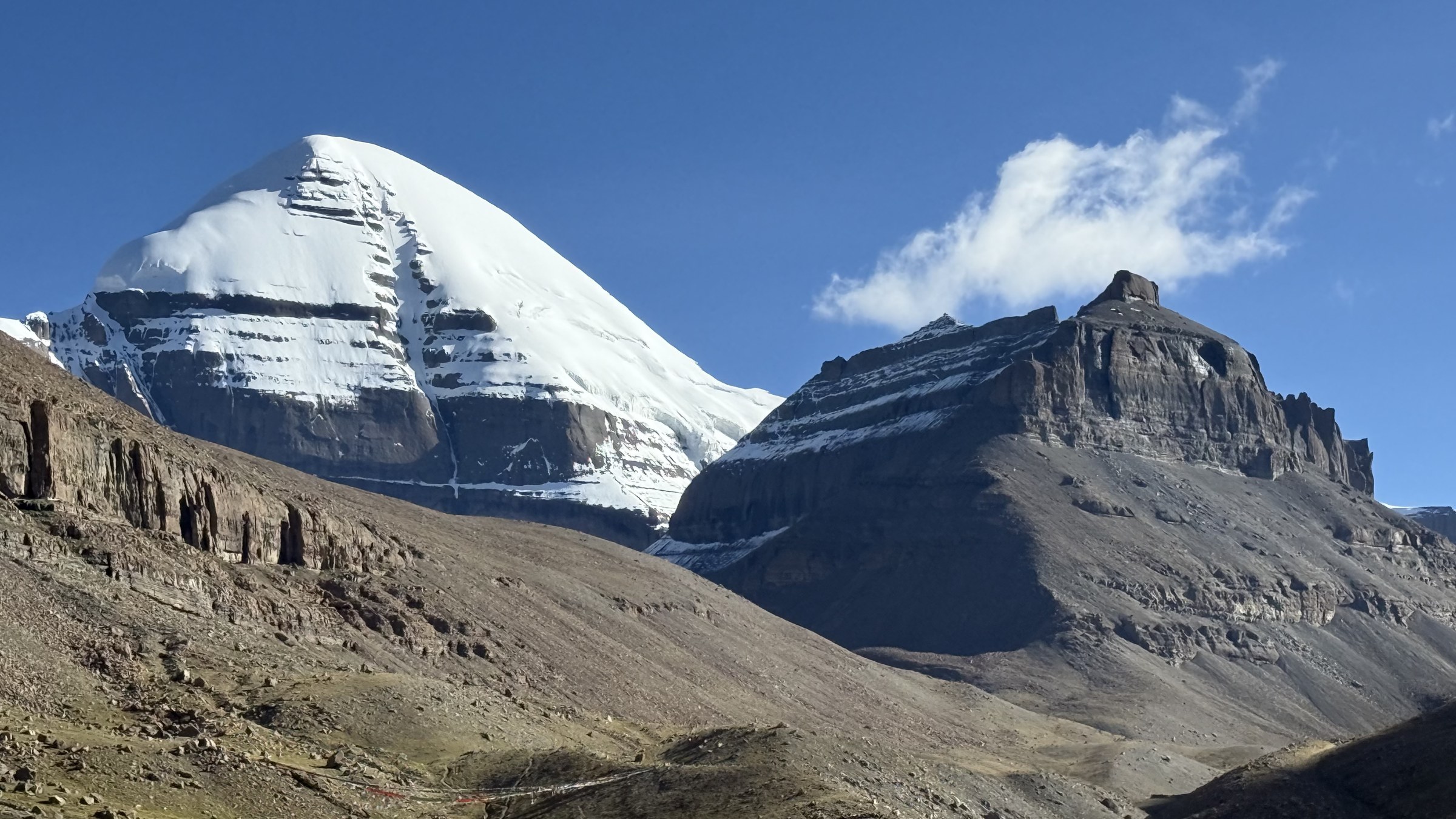
Standing before Mount Kailash reminded me how small I was.
Building companies reminded me how attached I could become.
Running taught me that the mind often gives up before the body does.
Prayer showed me that effort alone cannot carry us everywhere.
And the Bhagavad Gita began asking me a question I had spent years avoiding:
Can you give everything to your duty without allowing the outcome to become your identity?
The Words That Found Me
Along this journey, I heard a spoken passage that stopped me in my tracks.
The words were not mine.
They came from an original recording that I discovered online, and I am deeply grateful to its creator for expressing something I had felt but could not yet explain.
Listen to the original recording here: youtube.com/watch?v=enEaHoHh2I4
Original spoken passage from this YouTube recording. I am grateful to its creator for the words that inspired this reflection.
The passage said:
You could become a great horseman and, in doing so, help free yourself in this world—but only if, through prayer, you become a sweet lover of the Great Spirit.
It is naïve to believe we are not engaged in a fierce battle. Every day, I see and hear brave foot soldiers all around me going into battle, falling to the ground in excruciating pain.
Yet you can become a victorious horseman and carry your heart through this world like a life-giving sun—but only if you and the Great Spirit become sweet lovers.
Attribution: Original spoken passage from this YouTube recording. Not written by Kaivan Dave.
I could not stop thinking about it.
I listened to it again.
And then again.
Something in those words felt strangely familiar.
At first, I thought the image was about the horse.
Then I realized the horse was not the point.
The horseman was.
I was not hearing a story about someone who had conquered a battlefield.
I was hearing a story about someone learning to guide himself through one.
And maybe that is why it felt so connected to me.
Because I have never been afraid of difficult journeys.
I have built businesses from nothing.
I have trained my body through exhaustion.
I have crossed countries and mountains in search of something I could not always name.
I have reached goals and discovered that achievement does not protect you from emptiness.
I have fallen.
I have become attached.
I have questioned myself.
I have started again.
The passage did not describe who I had already become.
It described the person I was trying to become.
The Horseman
The horseman is not someone who conquers the world.
He is someone who learns to guide himself.
His mind.
His fear.
His anger.
His ego.
His pride.
His desires.
His attachment to recognition.
His need to always be right.
His need to always win.
That may be the hardest journey any of us will ever take.
It is much easier to identify an enemy outside ourselves.
A competitor.
A difficult person.
An unfair situation.
A business problem.
A physical limitation.
But the most dangerous forces are often the ones operating quietly within us.
Fear disguised as caution.
Ego disguised as ambition.
Attachment disguised as commitment.
Control disguised as responsibility.
Anger disguised as strength.
The horseman does not destroy these forces.
He learns to recognize them.
He learns to guide them.
He learns when to move and when to remain still.
He learns how to use power without allowing power to use him.
The Horse Is the Mind
The horse is powerful.
It can carry us farther than we imagined.
But without awareness and direction, that same power can carry us toward fear, anger, comparison, or destruction.
The mind can build a company.
It can also convince us that the company determines our worth.
The mind can help us prepare for a race.
It can also tell us we are failures because one run did not go as planned.
The mind can help us serve thousands of people.
It can also make us obsessed with whether those people recognize us.
The mind can become an extraordinary servant.
But it is a dangerous master.
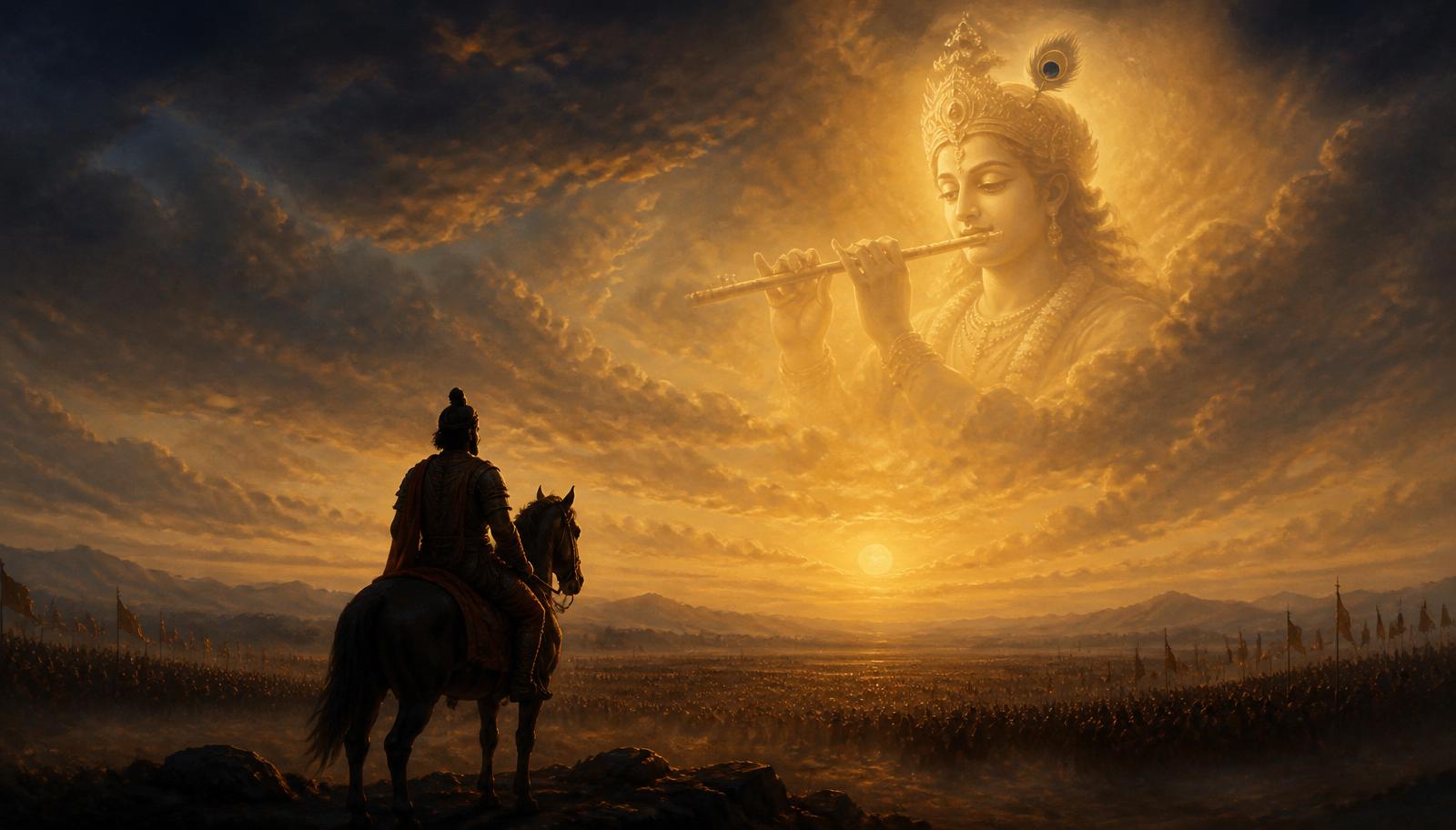
That is what the image of the horseman began to mean to me.
Someone who is learning to ride the mind instead of being dragged by it. This is also where I keep coming back to the difference between motivation and discipline — motivation is a mood the horse creates; discipline is the horseman deciding to move anyway.
I say "learning" because I have not mastered this.
I still become attached.
I still feel fear.
I still worry about outcomes.
I still allow success to excite my ego and setbacks to question my identity.
But now I can see the battle more clearly.
And seeing the battle is the beginning of learning how to stand in it.
Krishna Did Not Remove the Battlefield
The more I return to the Bhagavad Gita, the more I understand why this passage affected me so deeply.
Arjuna stood on the battlefield of Kurukshetra overwhelmed by fear, grief, duty, doubt, and confusion.
He did not know how to move forward.
He wanted to withdraw.
Krishna did not remove the battlefield.
He did not tell Arjuna that a spiritual life meant escaping difficulty.
He taught him how to stand within it.
That may be one of the most important lessons I have encountered.
A relationship with God does not guarantee a life without conflict.
Prayer does not mean the battle disappears.
Devotion does not remove responsibility.
Sometimes devotion is what gives us the courage to finally face the responsibility placed before us.
Do the Work. Surrender the Outcome.
In Bhagavad Gita 2.47, Krishna teaches Arjuna that his responsibility is to act, but that he cannot claim ownership over the results of his actions.
I used to interpret this as:
Work hard and do not expect anything.
Now I hear something deeper.
Give the work everything you have.
Prepare.
Show up.
Lead.
Build.
Serve.
Love.
Do your duty with your whole heart.
But do not let the outcome become your identity.
You are not the applause.
You are not the criticism.
You are not the valuation.
You are not the finish time.
You are not the number of customers.
You are not the success.
And you are not the failure.
Your responsibility is the action placed before you.
The result belongs to something larger.
This does not mean becoming passive.
It does not mean caring less.
It means giving your best without allowing the outcome to own your peace.
That is very different.
Your Duty Is Not Your Identity
This teaching has challenged how I think about entrepreneurship.
For years, it was easy to confuse what I built with who I was.
When the business was growing, I felt stronger.
When it struggled, I questioned myself.
When people recognized the work, I felt validated.
When they did not, part of me wondered whether the work mattered.
Krishna's teaching asks me to separate duty from identity.
Build because building is part of your nature.
Serve because service has been placed before you.
Lead because people are depending on you.
Give everything because excellence is itself an offering.
But do not ask the work to tell you who you are.
The work is your responsibility.
It is not your soul.
The Invisible Battles We All Fight
The passage says it is naïve to believe we are not engaged in a fierce battle.
The older I get, the more true that feels.
Every day, we walk past people fighting wars we cannot see.
The father trying to remain strong for his family while quietly wondering how he will carry everything.
The entrepreneur questioning whether there is enough left inside them to continue.
The athlete recovering from an injury and grieving the person they used to be.
The student carrying anxiety in silence.
The person who has not breathed or slept properly in years.
The friend who smiles while struggling simply to get through the day.
The person who appears difficult because they are in pain.
The person who appears distant because they are afraid.
The person who appears successful because they have learned how to hide what is breaking inside them.
These are the brave foot soldiers around us.
Their battles are invisible.
So are ours.
The Brave Foot Soldiers Around Us
I do not think the passage is glorifying pain.
It is asking us to recognize it.
There are people falling around us every day.
Not always physically.
Some are falling emotionally.
Spiritually.
Financially.
Quietly.
Some get back up before anyone notices.
Some do not know how.
Some only need one person to see them without judgement.
The more I recognize my own invisible battles, the harder it becomes to judge someone else quickly.
We rarely know what a person had to survive simply to stand in front of us that day.
Compassion begins with remembering that.
The Battle Is Not Against Other People
It can be tempting to believe the battle is against the world.
Against a competitor.
Against someone who doubted us.
Against the people who misunderstood us.
Against circumstances that did not go our way.
But I do not think that is the greatest battle.
The greatest battle is between fear and faith.
Ego and service.
Reaction and awareness.
Attachment and surrender.
Bitterness and compassion.
The person we are today and the person we are capable of becoming.
The world may create the conditions.
But the battlefield is within us.
The Greatest Battle Is Within
In Bhagavad Gita 6.5–6, Krishna teaches that the mind can become our friend or our enemy.
That teaching gave the horseman metaphor even greater meaning for me.
The same mind that can guide us toward discipline can guide us toward obsession.
The same ambition that can help us serve can make us addicted to recognition.
The same strength that helps us endure can prevent us from asking for help.
The same confidence that allows us to lead can make it difficult to listen.
Nothing outside us needs to defeat us when the unguided mind is already working against us.
The horseman's victory is not public.
No crowd may ever see it.
There may be no award.
No announcement.
No finish line.
The victory happens in small decisions.
The Victories No One Sees
Choosing patience when anger would feel easier.
Choosing honesty when hiding would feel safer.
Choosing faith when fear is louder.
Choosing service when the ego wants recognition.
Choosing to listen instead of needing to be right.
Choosing to begin again after falling.
Choosing to remain soft when suffering gives you every reason to become hard.
These victories do not always change how the world sees us.
They change who we become.
And perhaps that is the only victory that follows us beyond this life.
Suffering Can Harden Us or Open Us
Pain does not automatically transform us.
Sometimes pain makes us wiser.
Sometimes it makes us bitter.
Sometimes it opens the heart.
Sometimes it closes it.
The passage does not say that falling to the ground makes someone victorious.
It says that after falling, we can become the kind of person who carries a life-giving heart through the world.
The transformation is not in the fall alone.
It is in what we allow the fall to make of us.
Falling Is Not the Opposite of Becoming
I used to imagine becoming as a continual upward journey.
More clarity.
More strength.
More success.
More discipline.
More progress.
Now I believe some of the most important parts of becoming happen when life brings us to the ground.
When the business does not go according to plan.
When the body refuses to perform as it once did.
When a relationship changes.
When the future becomes uncertain.
When our old identity no longer fits and the new one has not yet fully appeared.
These moments can feel like failure.
But sometimes life has to remove the person we were pretending to be before we can meet the person we are being asked to become.
Do Not Lose Your Heart
The true victory is not avoiding suffering.
It is enduring suffering without allowing it to take away your heart.
That may be what the passage means by becoming a victorious horseman.
Not someone who never falls.
Someone who rises without becoming cruel.
Someone who experiences betrayal without losing the ability to trust.
Someone who experiences failure without losing the courage to build again.
Someone who experiences grief without closing the door to love.
Someone who sees the suffering of the world and still chooses to bring light into it.
This kind of strength cannot come from ambition alone.
It requires devotion.
It requires prayer.
It requires a relationship with something greater than the self.
Becoming Sweet Lovers of the Great Spirit
This may be the line that moved me most.
The passage does not say we become victorious by becoming more powerful.
It says transformation becomes possible when we and the Great Spirit become sweet lovers.
To me, this speaks of devotion.
Not religion as performance.
Not prayer as a transaction.
Not asking God only for success, protection, or favorable outcomes.
It speaks of relationship.
Trust.
Surrender.
Love.
The willingness to sit quietly before God without trying to negotiate.
My devotion to Lord Shiva and my growing relationship with Krishna have not made me feel as though I understand everything.
They have made me more aware of how much I do not understand.
But they have also changed the questions I ask.
I used to ask:
How can I become more successful?
Now I find myself asking:
What is my duty?
How can I serve?
What am I being asked to learn?
What is this moment trying to remove from me?
How can I act fully and still surrender the outcome?
How can I make the work an offering?
The deeper relationship with God becomes, the less life feels like a collection of unrelated events.
Business.
Running.
Pilgrimage.
Pain.
Breath.
Prayer.
Service.
They begin to feel like different classrooms teaching the same lesson.
Become disciplined without becoming hard.
Become ambitious without becoming attached.
Become successful without becoming proud.
Become strong without losing tenderness.
Act fully.
Love deeply.
Surrender honestly.
Becoming a Life-Giving Sun
The final image in the passage is the one I keep returning to.
To carry your heart through the world like a life-giving sun.
The sun does not ask who deserves its light.
It gives warmth.
It gives energy.
It gives life.
It does not need applause.
It does not compare itself with another sun.
It simply becomes what it was created to be.
I do not think the goal of life is only to become wealthy, powerful, admired, or accomplished.
Those things can be used for good.
But they cannot tell us whether we became good.
A person can build an extraordinary life and leave everyone around them feeling smaller.
Another person can live quietly and leave every room warmer than they found it.
I am beginning to believe the second life may be the greater achievement.
The Person I Hope to Become
I do not want to be remembered only for the companies I built.
I do not want numbers to become the final measure of my life.
I want to be remembered for how people felt in my presence.
Did they feel seen?
Did they feel respected?
Did they feel stronger?
Did they feel that someone believed in them?
Did I help them breathe a little easier?
Did I carry hope into moments that felt hopeless?
Did I leave more light than I found?
That is what the life-giving sun means to me.
Not becoming the centre of the world.
Becoming someone whose heart gives life to the world around him.
Direction, Not Perfection
I do not think becoming is about perfection.
It is about direction.
It is choosing, every day, to become a little more patient.
A little more honest.
A little more courageous.
A little more compassionate.
A little more useful.
A little more present.
A little more devoted.
Not because the world is watching.
Because God is shaping us through every action.
I still fail.
I still become attached.
I still allow fear to become louder than faith.
I still confuse responsibility with control.
I still forget that the work is mine but the outcome is not.
I have not become the horseman.
I am learning how to ride.
Maybe that is all any of us can honestly say.
We are learning.
Falling.
Rising.
Remembering.
Forgetting.
Returning.
Becoming.
Maybe We Are All Standing on Kurukshetra
Your battlefield may not look like Arjuna's.
It may be your marriage.
Your health.
Your business.
Your grief.
Your relationship with your family.
Your inability to forgive.
Your fear of beginning again.
Your attachment to how life was supposed to look.
Your mind at three in the morning.
But perhaps Krishna's question remains the same:
Will you run from the life placed before you?
Or will you meet it with courage, devotion, and love?
Krishna did not ask Arjuna to become fearless before acting.
He asked him to see clearly.
To remember who he was.
To do his duty.
To offer the action.
To surrender the result.
Maybe that is what becoming asks of us too.
Not to wait until we are completely healed.
Not to wait until every doubt disappears.
Not to wait until the outcome is guaranteed.
But to stand where life has placed us and take the next right step.
With faith.
With love.
With our hearts intact.
This is not a blog about having the answers.
It is a journal about the questions that continue to shape my life.
I am still learning.
Still falling.
Still becoming.
If you are carrying a battle no one else can see, walk with me.
Maybe we are all standing on our own Kurukshetra.
Maybe we are all learning to become the horseman.
And maybe the journey itself is what brings us home.
Questions I'm Sitting With
Sources and Further Reflection
Original spoken passage that inspired this reflection: youtube.com/watch?v=enEaHoHh2I4
Bhagavad Gita verses reflected upon in this article:
- Bhagavad Gita 2.47
- Bhagavad Gita 6.5–6
Editorial note: The explanations of these verses in this article are personal, plain-language reflections rather than claims to provide a definitive Sanskrit translation or formal theological commentary.