Table of contents
For most of my life, purpose felt like a finish line I had to reach.
I thought if I built enough, succeeded enough, traveled enough, and experienced enough, eventually I would arrive at the answer:
This is why I am here.
I've been an entrepreneur for most of my adult life. I've started companies. I've helped build companies. Some worked. Some didn't.
I've made money. I've lost money. I've moved countries. I've walked away from people, places, businesses, and versions of myself that no longer felt aligned.
And underneath all of it, one question kept following me:
What am I actually here to do?
Not what can I build?
Not what can make me successful?
But what am I supposed to serve?
What is my dharma?
That's a very different question.
When Achievement Is No Longer Enough
For a long time, achievement gave me direction.
There was always another goal. Another company. Another number. Another idea. Another version of myself I thought I needed to become.
And there is nothing wrong with ambition.
I still love building.
I still have enormous dreams.
That hasn't gone away.
But something has changed.
I don't want to build simply because I can build anymore.
I want to understand why I'm building.
I want my work to mean something. I want my life to mean something. And I want whatever I'm building on the outside to somehow align with what is happening on the inside.
That search has taken me to different places around the world. It has introduced me to remarkable people. And more recently, it has taken me much deeper into my spiritual practice.
When Swamiji Entered My Life
A few months ago, Om Swami entered my life through his books.
I started with The Heart of Success. Then came If Truth Be Told: A Monk's Memoir and Thirteen Months In The Himalayas, along with his writings about his time and sadhana in the Himalayas.
I wasn't looking for someone to give me the answers to my life.
But there was something about Swamiji's story that I connected with deeply.
Here was a man who had also been an entrepreneur.
He had built businesses. He had experienced material success. He had lived internationally. He understood ambition, business, money, risk, and achievement.
Parts of his early journey even reminded me of my own. Coming from India, adapting to a different world, building businesses, chasing success.
And then he walked away from it.
Not because he had failed at that life.
He had succeeded at it.
Yet something deeper was calling him.
That fascinated me.
The more I read, the more curious I became.
Eventually I thought:
I want to see this for myself.
Going to the Ashram
So I went.
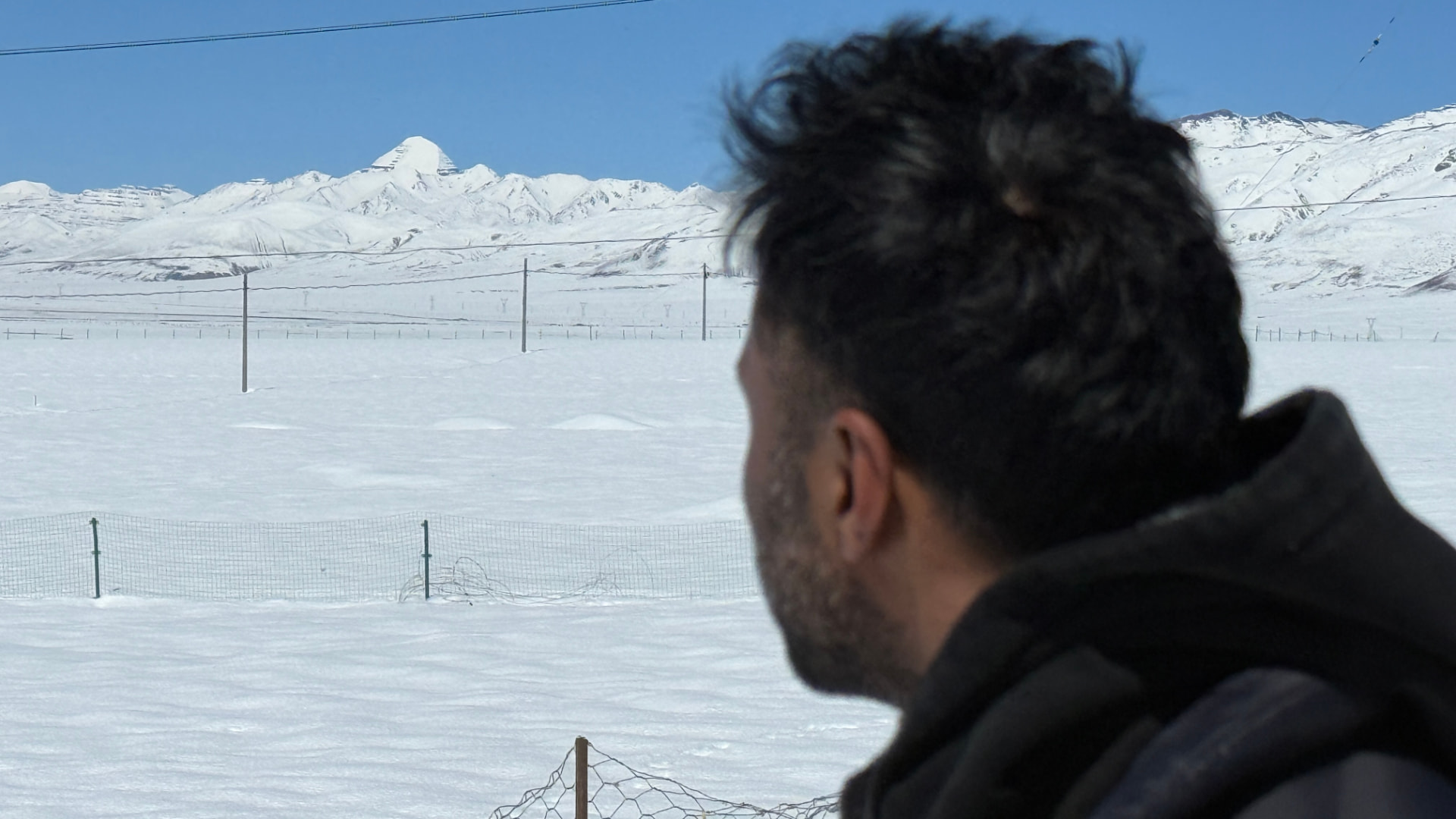
I spent almost two weeks living at the ashram and experiencing the world Swamiji had built.
And it was beautiful.
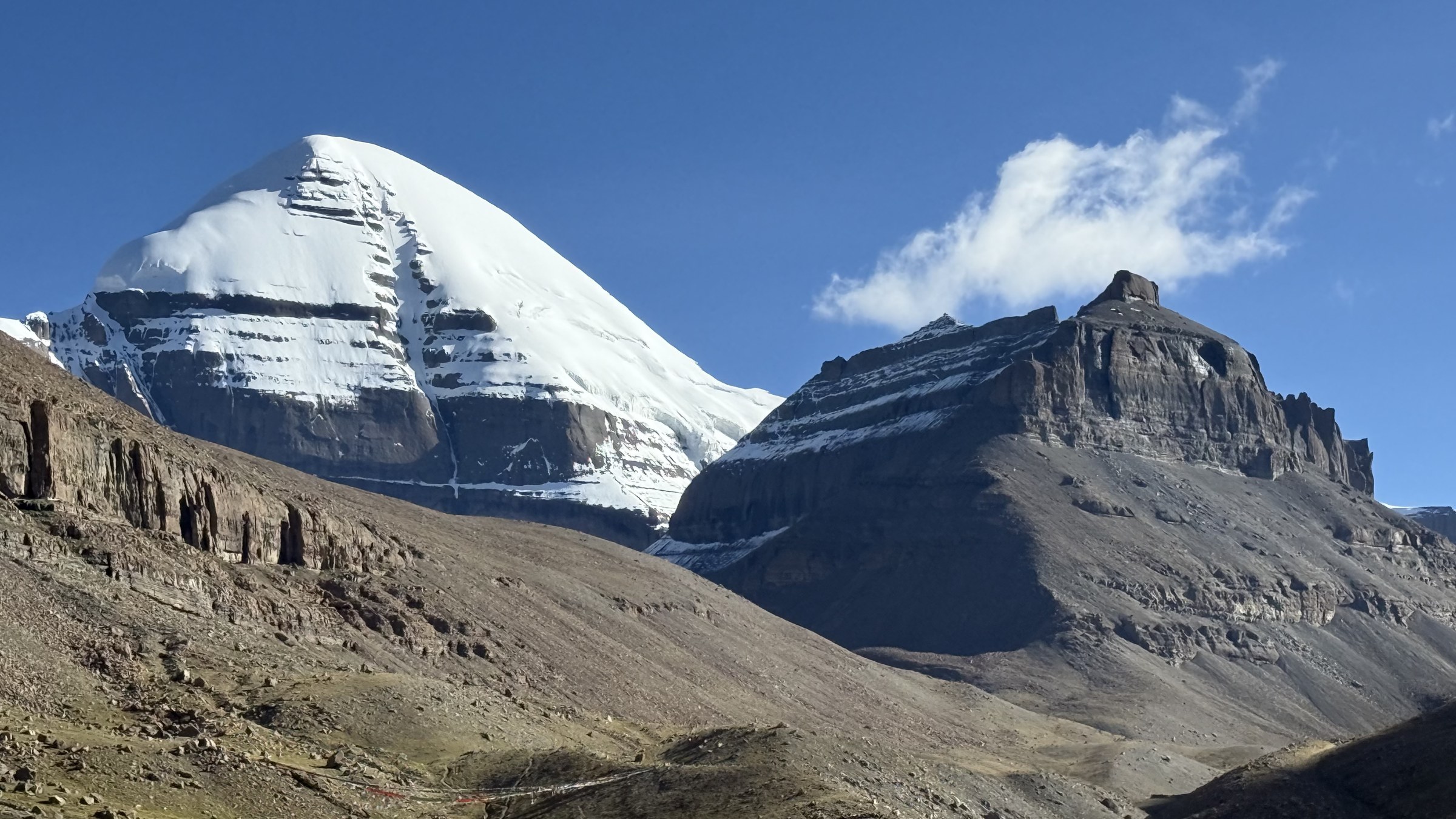
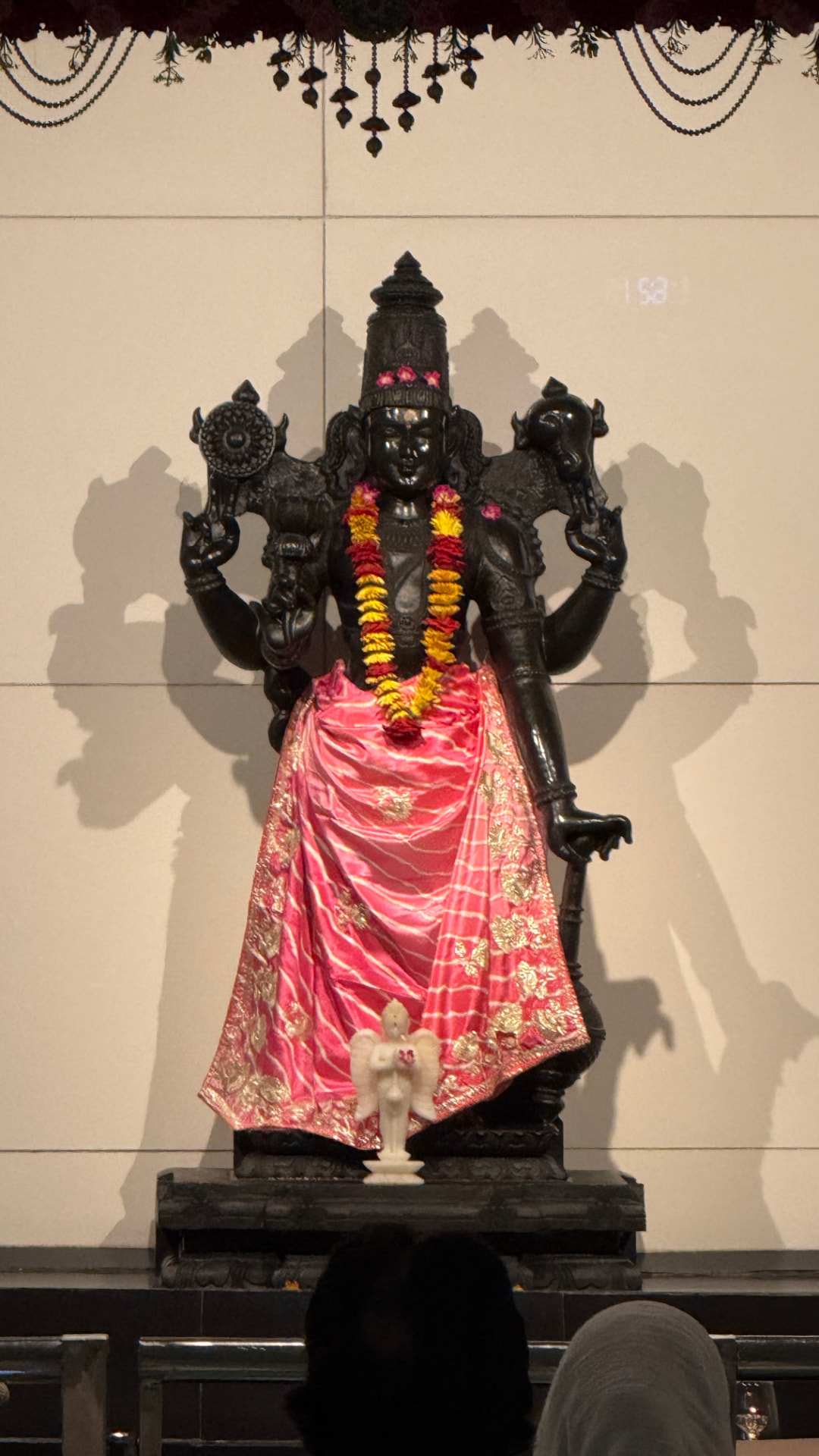
The Shri Hari Temple moved me deeply. The murti, the energy of the temple, the aarti, the people, the mountains, the stillness of the place.
But what struck me just as much was thinking about what that land once was and what it had become.
Something that began as a vision had become a place where people could come from around the world to pray, learn, heal, practice, reflect, and simply be.
I met people whose lives had been touched by Swamiji in completely different ways.
I experienced the practices.
I experienced the community.
I experienced the energy of the place for myself.
I went there wanting to understand more about Swamiji.
Strangely, I came away wanting to understand more about myself.
Who am I when I'm not chasing the next outcome?
What actually matters to me?
What am I supposed to serve?
What is my truth?
I still don't have those answers.
But I am deeply grateful that Swamiji entered my life the way he did.
Not because he gave me my truth.
I don't think anyone else can do that for us.
But because his life, his teachings, and what he has built have pushed me to search more sincerely for my own.
What Is Actually Mine?
One of the most uncomfortable questions spirituality has forced me to confront is:
What if the outcome isn't mine?
That is a difficult idea for an entrepreneur.
My entire adult life has trained me to think almost the opposite.
Set the goal.
Make the plan.
Execute.
Measure.
Optimize.
Push harder.
Get the result.
And there is tremendous value in taking responsibility for our lives.
But spirituality has started showing me where that responsibility ends.
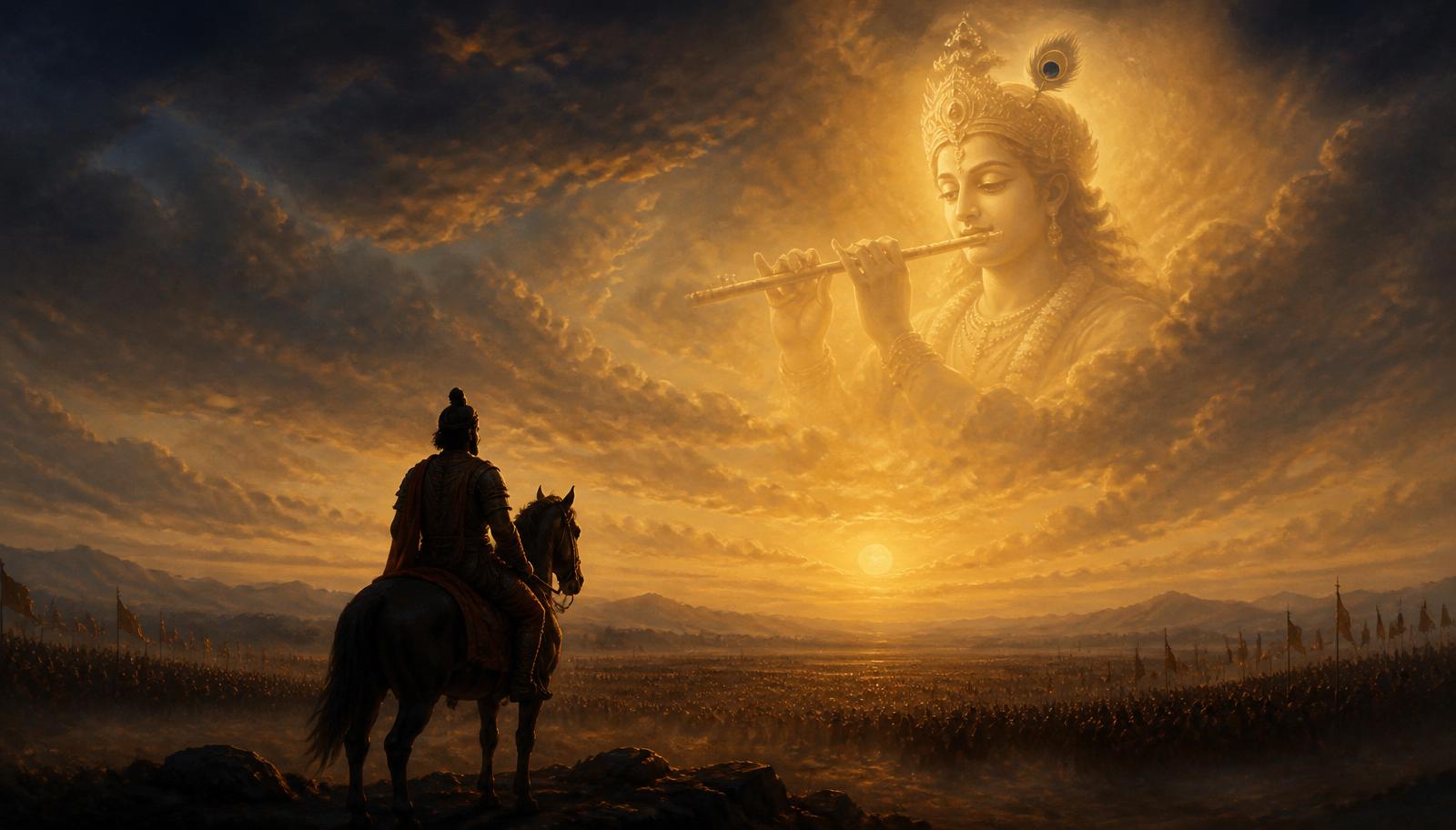
The Bhagavad Gita keeps bringing me back to this.
Krishna teaches Arjuna that we have a right to our actions, but not to the fruits of those actions.
I've heard variations of that teaching many times.
But there is a huge difference between understanding something intellectually and actually trying to live it.
Because if the outcome isn't mine, then what exactly is mine?
My effort is mine.
My intention is mine.
How I treat people is mine.
Whether I show up is mine.
Whether I tell the truth is mine.
Whether I act with integrity is mine.
Whether I give something everything I have is mine.
But the fruit?
I'm beginning to understand that there are simply too many forces involved for me to pretend I control all of it.
Maybe Dharma Isn't One Big Answer
I've spent years thinking I needed to discover my one great purpose.
Maybe I've been asking the wrong question.
Maybe dharma isn't always one giant lifelong assignment waiting somewhere for us to discover it.
Maybe sometimes dharma is simply what life is asking of us right now.
Right now, perhaps mine is to build with sincerity.
To serve through the work I'm doing.
To be present for my parents.
To be a good brother and friend.
One day, perhaps, to be a husband and father.
Sometimes it might simply be to sit quietly and do my japa.
To tell the truth.
To listen.
To love.
To give.
To become a little more conscious than I was yesterday.
The question then changes.
Instead of constantly asking:
What am I supposed to get from this life?
I can ask:
What is life asking of me right now?
That feels very different.
Finding My Own Truth
I'm still learning how to live this.
I'm still an entrepreneur.
I still have ambition.
I still want to build something meaningful.
I still have dreams for my business, my family, my relationships, and my life.
Spirituality hasn't made those desires disappear.
What it is slowly changing is my relationship with them.
Maybe I can give everything I have to the action without demanding that life give me the exact outcome I imagined.
Maybe I can work incredibly hard while still surrendering.
Maybe ambition and surrender aren't opposites.
Maybe I can plan without believing the plan controls life.
Maybe I can want something deeply without believing I know exactly when or how it should arrive.
And maybe finding my truth doesn't mean arriving at some grand answer.
Maybe finding my truth is simply becoming quiet enough, honest enough, and courageous enough to keep listening.
I don't know exactly where this path is taking me.
And for someone who has spent most of his life wanting to know the destination, that's uncomfortable.
But for the first time in my life, I'm becoming a little more okay with not knowing.
I can keep doing my work.
I can keep showing up.
I can keep serving.
I can keep walking.
And I can leave a little more room for life, nature, and God to decide where the path leads.
Maybe that's where I am right now.
Not finding the truth.
Just learning how to find my own.
And trying, one day at a time, to walk it truthfully.
As Swamiji says, maybe it's time to go find your own truth.