Table of contents
I had been planning my third parikrama around Mount Kailash for months.
If you are not familiar with the word, parikrama is the practice of going around a sacred place as an act of devotion. It can be around a temple, a deity, a holy place or, in this case, a sacred mountain. In Tibetan Buddhism, this same practice is commonly called a kora. I will use the word parikrama throughout this article.
This parikrama already felt different.
2026 is the Year of the Horse in the Tibetan calendar. The calendar follows a twelve year animal cycle, and the Horse Year holds special significance for Mount Kailash. According to Tibetan pilgrimage tradition, completing one parikrama around Kailash during the Horse Year is believed to carry the spiritual merit of thirteen parikramas in an ordinary year.
I had already completed two parikramas around Mount Kailash. This was going to be my third.
Our pilgrimage was scheduled to begin on September 23, and if everything went according to plan, we would begin our parikrama on October 1.
But almost nothing went according to plan.
Before We Even Left
On August 26, less than a month before our departure, devastating floods hit the Nepal and Tibet border region.
People lost their lives. Others went missing. Roads and bridges were damaged. Families and communities were affected. Watching everything unfold was heartbreaking, especially knowing we were supposed to travel through this region only a few weeks later.
When we first started planning the pilgrimage, there were 26 people in our group. By September 13, we were down to 12.
I completely understood.
We told everyone to make the decision that felt right for them and their families. A pilgrimage should never come before someone's safety.
The twelve of us who remained came from different parts of the world, and on September 23, we began our journey.
At that point, I thought the biggest uncertainty was behind us.
I was wrong.
Learning to Let the Plan Change
From almost the moment we arrived in Tibet, things kept changing.
We began in Lhasa, where our group visited Jokhang Temple, the Potala Palace and several monasteries. At Jokhang is the Jowo Shakyamuni, one of the most sacred images in Tibetan Buddhism. According to Tibetan tradition, the statue dates to the time of the Buddha and was blessed by the Buddha himself.
We also had an opportunity to watch the famous monk debates. For many people in our group, all of this was completely new.
From Lhasa, we continued deeper into Tibet.
One of our planned stops on the way toward Kailash was Everest Base Camp on the Tibetan side. I had been there twice before, but because of the heavy snowfall across the region, we started hearing that EBC might not be accessible.
Once again, there wasn't much we could do. We continued with the plan until someone told us otherwise.
Eventually, we got the news that we had our tickets and could go.
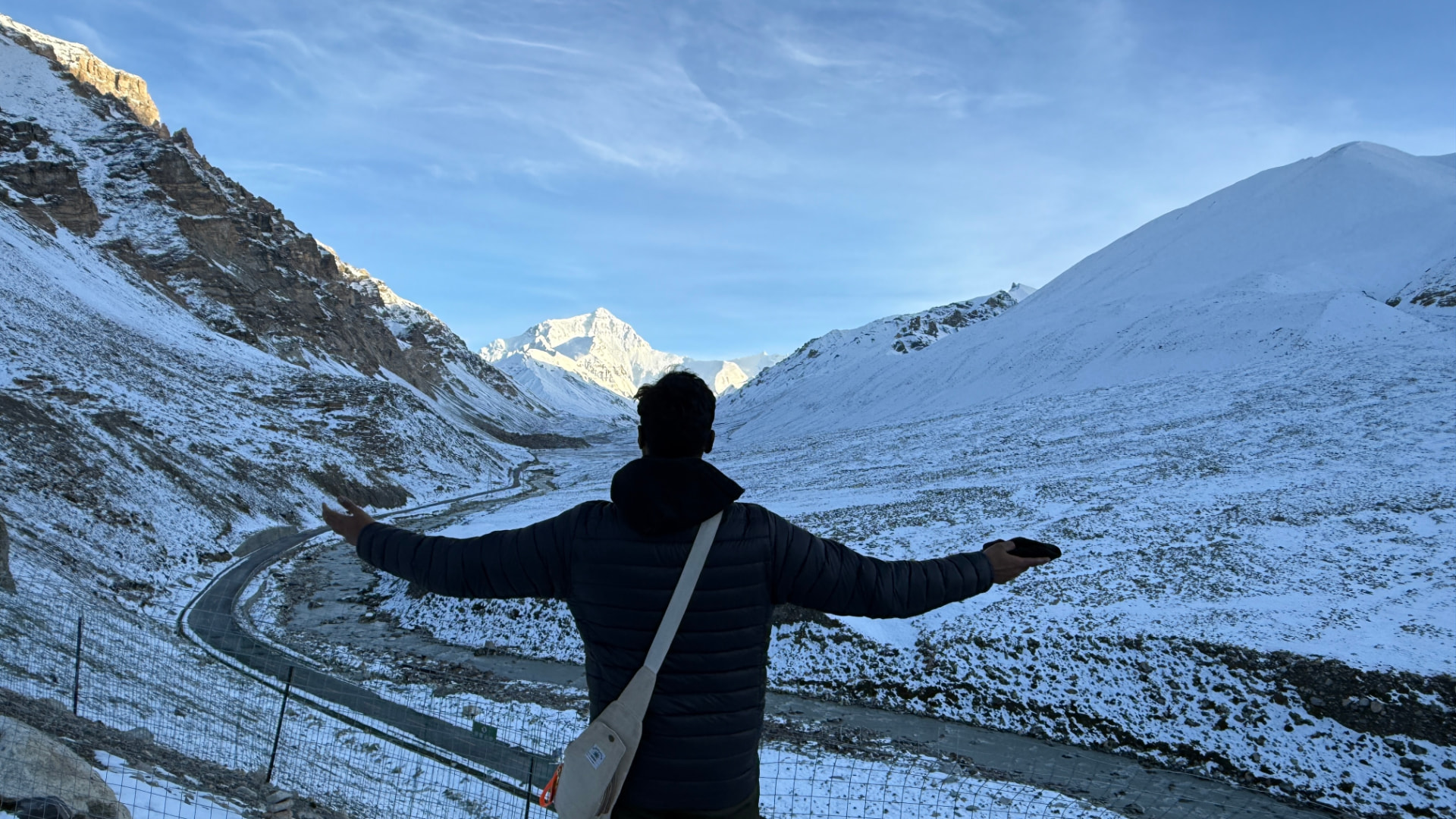
This became my third visit to Everest Base Camp, and somehow it was the most beautiful.
The sky was incredibly clear. Everything around us was covered in snow. I watched the evening light fall across Everest and the surrounding mountains, and for a little while, all the uncertainty disappeared.
A place we weren't even sure we would be allowed to visit had given us one of the most beautiful moments of the journey.
I didn't realize it then, but this pattern was going to repeat itself again and again.
The Parikrama Was Closed
As we continued toward Kailash, the news became more difficult.
Because of the heavy snowfall, the parikrama around Mount Kailash had been closed.
Our plan was to begin on October 1. Now we were hearing that it might not reopen until October 4 or 5, and even that wasn't guaranteed. From the information we had, our chances of starting as planned appeared to be less than 50 percent.
For twelve people who had traveled from around the world to do this pilgrimage, that was difficult to hear.
Still, we decided to continue toward Darchen.
Darchen is the small town at the base of Mount Kailash where the parikrama begins. We thought that even if we couldn't complete it, at least we could reach Kailash, have darshan, visit Lake Mansarovar and experience whatever else the journey allowed us to experience.
So we left Saga for Darchen.
About two hours into the drive, we stopped.
Heavy snow, road conditions and construction had created a roadblock. We arrived around 10:30 in the morning and were told the road wouldn't reopen until approximately 1 p.m.
So we sat on the bus and waited.
During that time, our guide started receiving more information. For the previous two days, there had been huge traffic jams farther along the route. Some tour buses had apparently become stuck badly enough that passengers had to spend the night on the road.
We had another decision to make.
Do we continue because that was the plan? Or do we accept what was happening in front of us and turn around?
After discussing it, we turned around.
We went all the way back to Saga and decided to try again early the following morning. There was no guarantee that anything would be different.
But the next morning, almost everything was.
We left early and encountered very little traffic. There were no major roadblocks. The road that had stopped us the previous day was now open.
By around 4 p.m., we had reached Darchen.
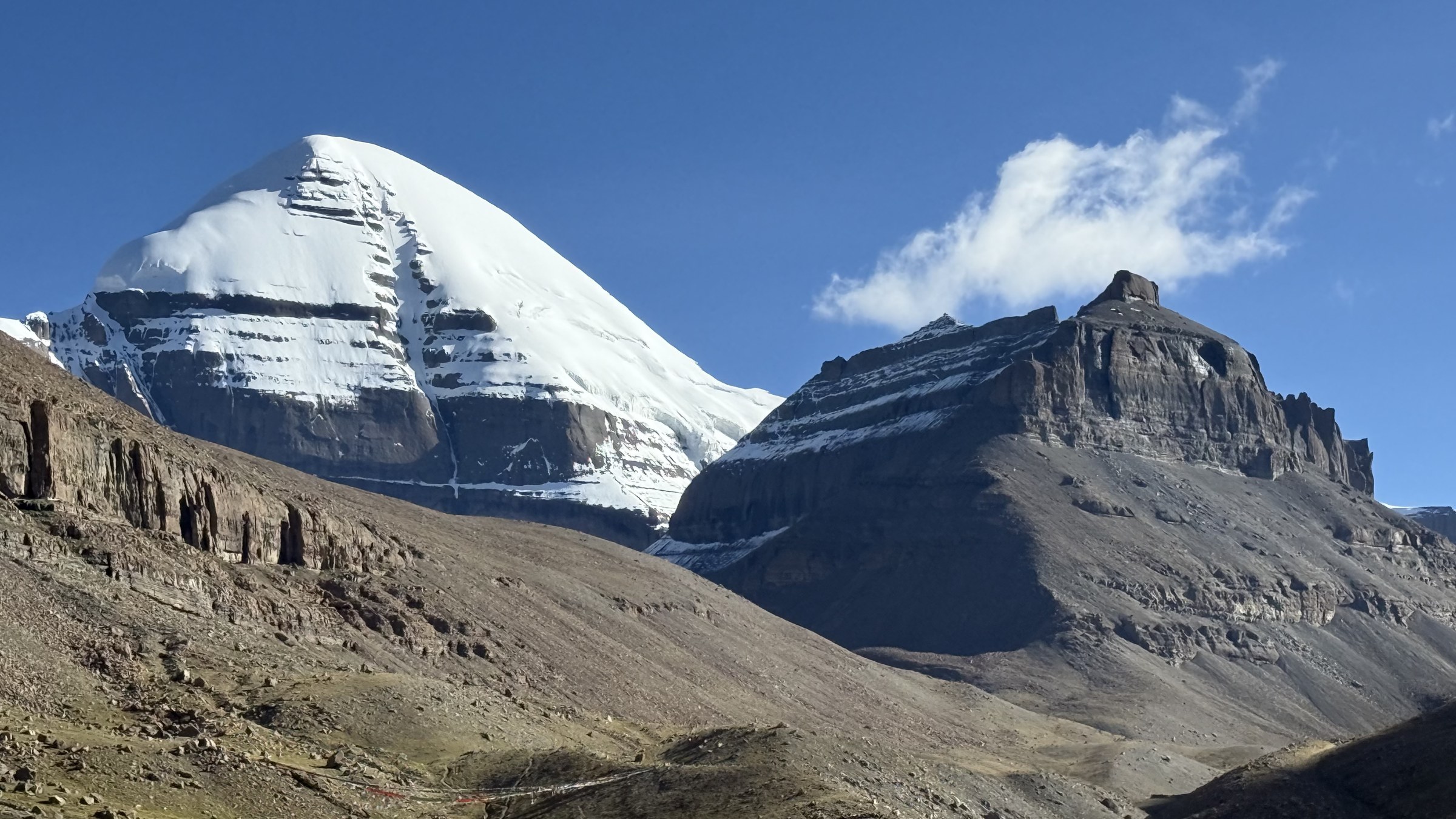
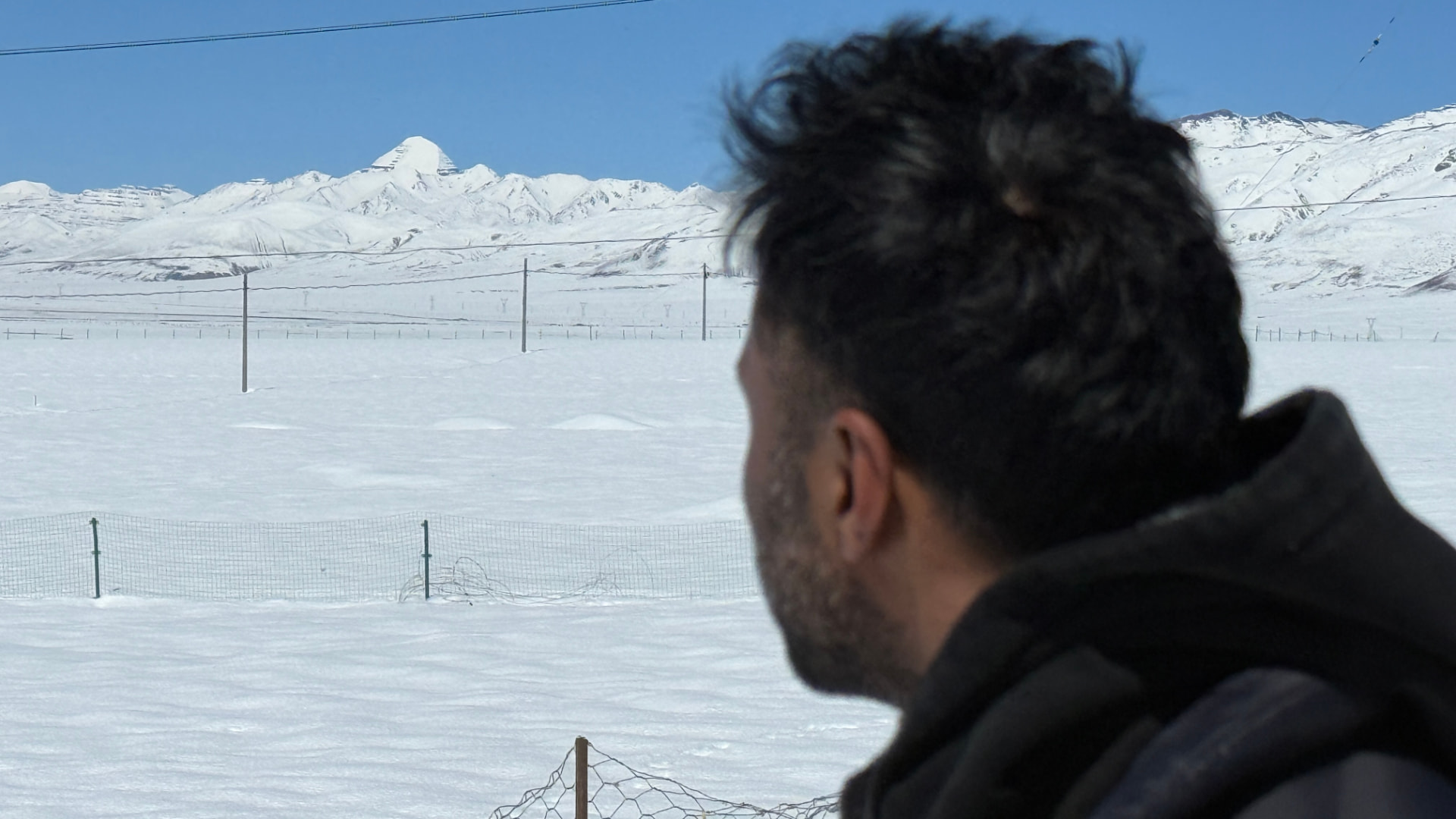
We could finally see Mount Kailash.
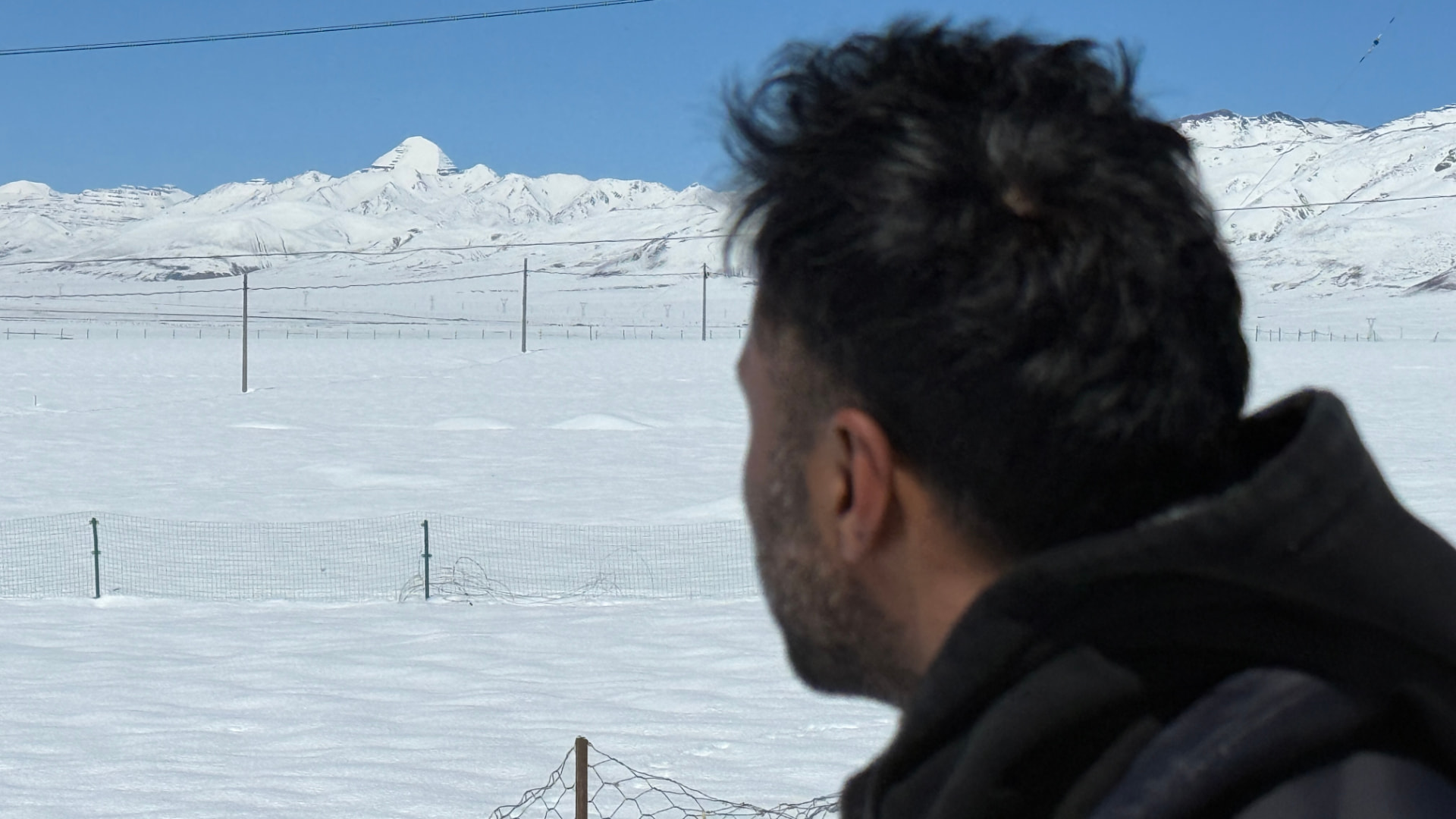
But we still had no idea whether we would be allowed to walk around it.
Four Hours in Darchen
That afternoon, I sat down in my room with Shiva, who I organized this pilgrimage with and who over the years has become almost like a father figure to me, and our tour guide, Kuncho.
We looked at all the information we had and discussed our options.
The first was to accept that the parikrama might not happen. We could have darshan of Kailash from Darchen, visit Lake Mansarovar, spend time there at night, complete whatever other parts of the pilgrimage were possible and then return to Lhasa according to our original itinerary.
The other option was to wait.
Several people in our group felt that they had already traveled so far that, if we received reasonable confirmation that the parikrama would reopen around October 5, they would consider extending their stay.
That would mean additional hotels, transportation, flight changes and more money out of everyone's pocket. None of it had been part of the plan.
We met with the group and explained the situation. Eventually, we decided that we didn't need to force a decision that evening. We would see what happened over the next few days and make the best decision with whatever information we had.
Then I went to get dinner by myself.
Something happens to me whenever I arrive in Darchen and see Kailash. I don't really know how to explain it. There is a burst of energy, but also a feeling of being incredibly small.
That evening, I looked toward Kailash and had my own conversation with Lord Shiva.
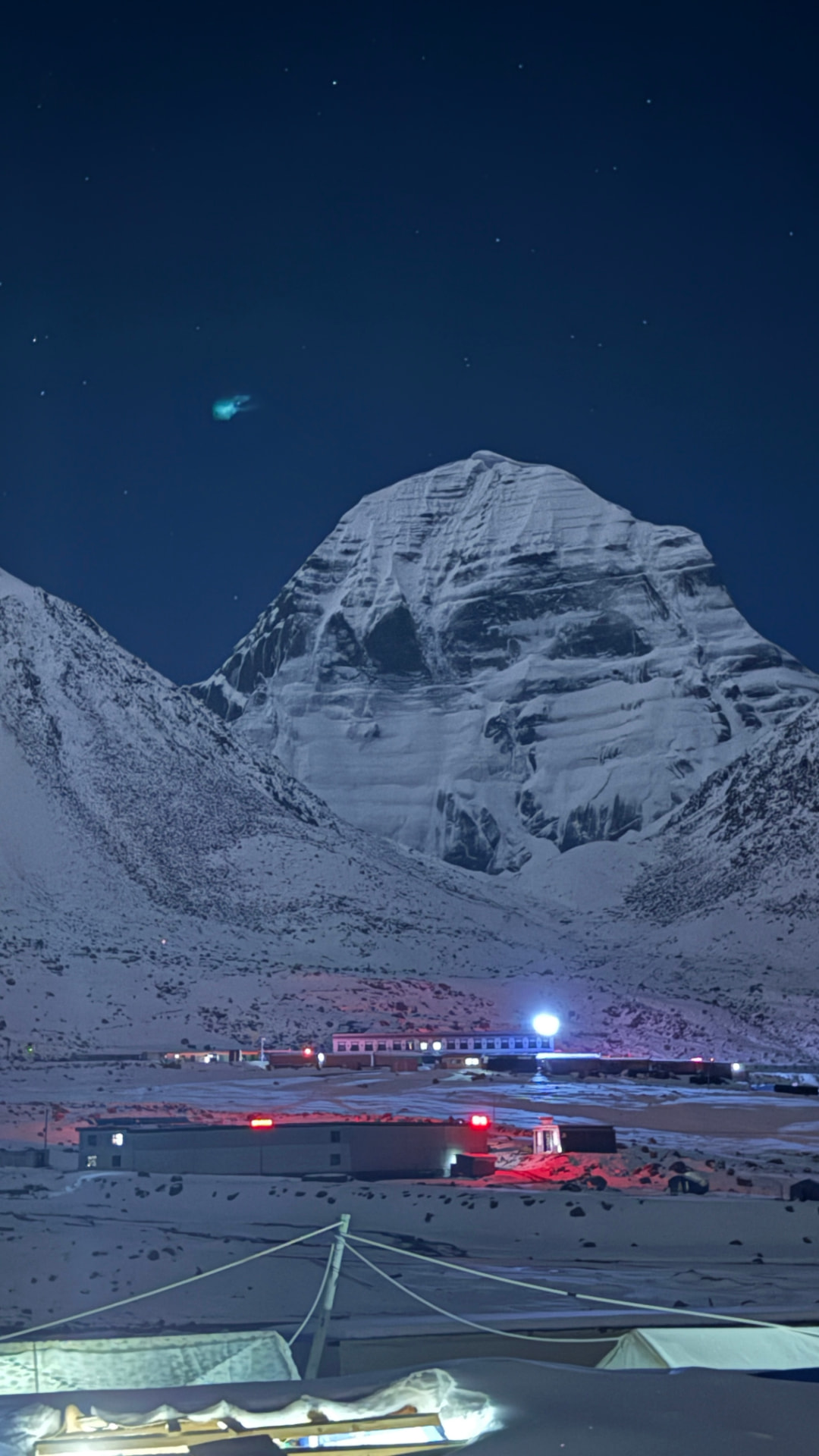
I wasn't asking for the road to open anymore. I wasn't asking to be allowed to do the parikrama. I wasn't negotiating.
I was simply grateful.
I remember thinking, Thank you for allowing me to come this far.
Sometimes I wonder why God loves us the way he does. We make mistakes. We question ourselves. Sometimes we don't even think we deserve that love. Yet God doesn't seem to judge us the way we judge ourselves.
That evening, I simply thanked Lord Shiva for allowing me to be there.
I had dinner and walked back toward my room. It was around 8:30 p.m. when my phone started lighting up with messages.
The parikrama was opening. We had our tickets. We were starting tomorrow.
I couldn't believe it.
Four hours earlier, we had been sitting in that same room discussing what we would do if the parikrama didn't happen.
Now I needed to get ready to walk around Mount Kailash the next morning.
The Road Opened. That Didn't Make It Easy.
There is something important about what happened next.
We had spent days hoping the road would open. When it finally did, that didn't mean the difficult part was over.
It meant the difficult part was beginning.
This was my third parikrama around Mount Kailash, and it became one of the hardest I have ever done.
Day two was especially difficult. Crossing Dolma La is already the toughest part of the parikrama. We were at more than 5,600 metres above sea level, surrounded by snow, and the temperature we experienced was around minus 14 degrees Celsius.
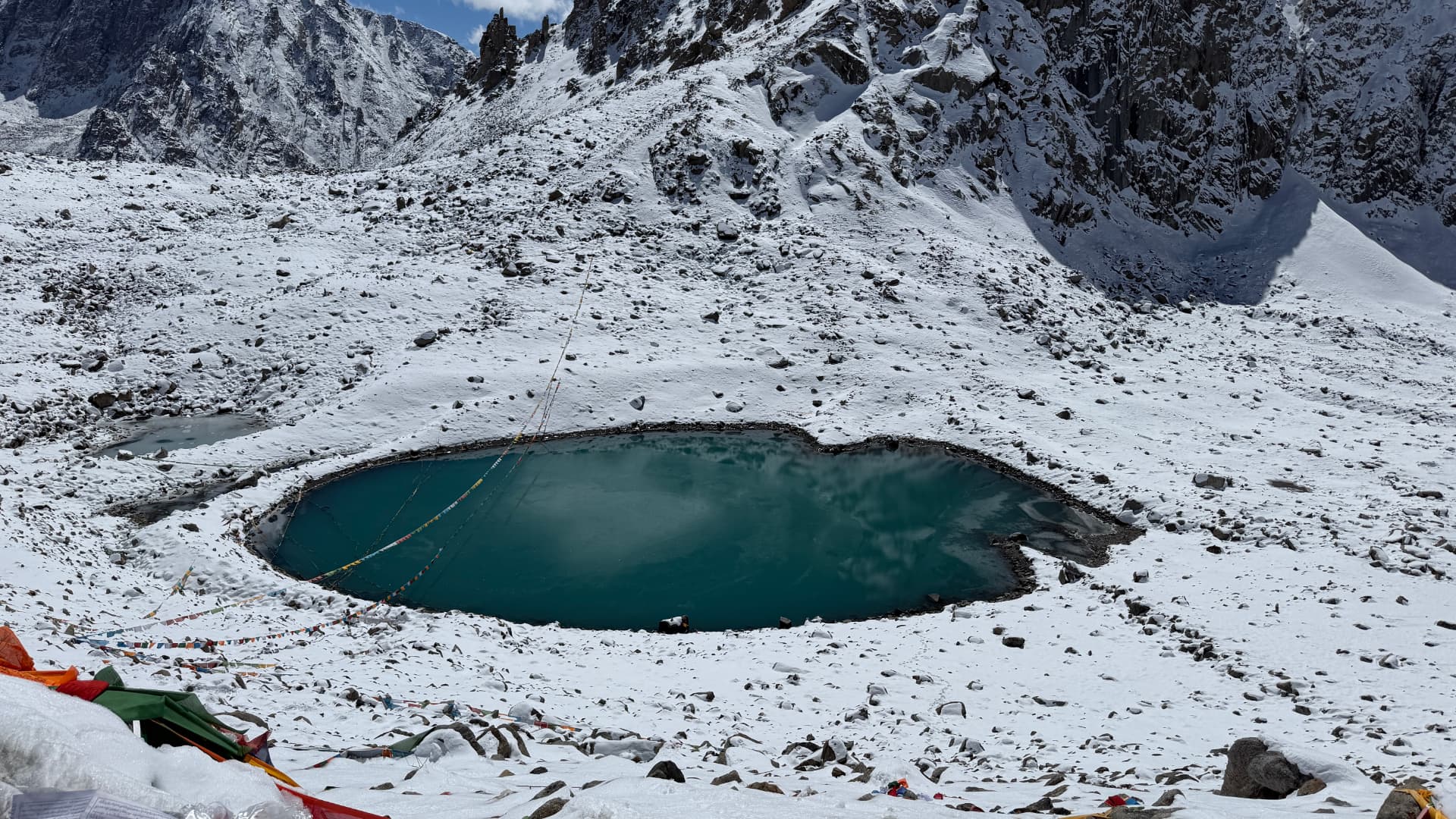
There were moments when I couldn't properly feel my hands, my face or my toes.
I was exhausted. At one point, I had tears coming from my eyes. I remember thinking, How can this be this hard?
But then I would come back to the same thing.
Thank you for allowing me to be here.
I kept chanting my mantra and taking another step.
Then another.
Slowly.
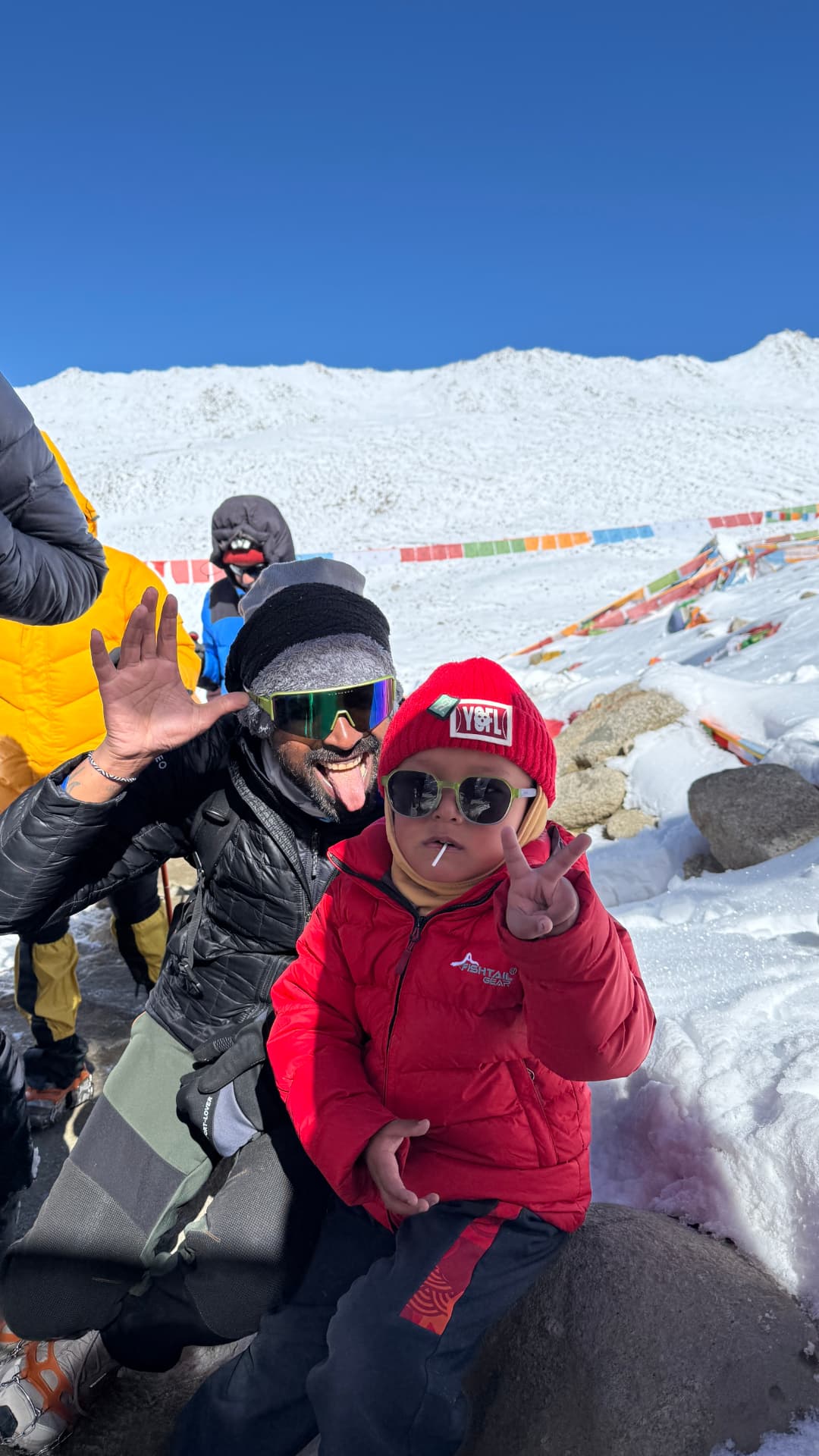
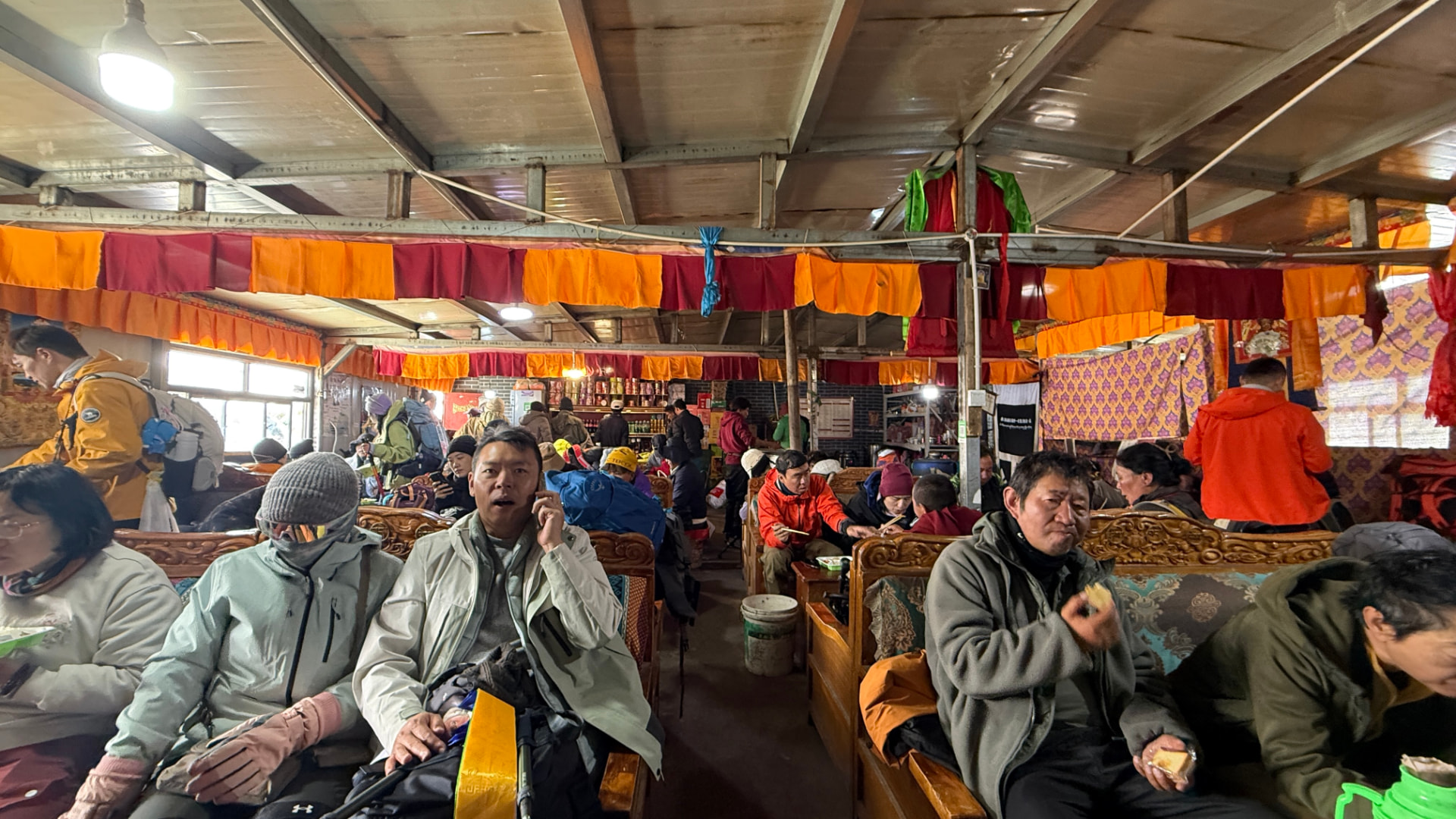
We didn't need to finish the entire mountain in that moment. We just needed to take the next step.
We began the parikrama as a group of twelve. Nine of us were ultimately able to complete it. Three members of our group weren't able to finish.
That reminded me of something I don't want to forget:
The road opening doesn't mean the road will be easy. Sometimes all you are given is the opportunity to walk it.
What My Third Parikrama Taught Me
I'm writing this on October 4, on my way back from Kailash.
My body is tired, but I feel an enormous amount of gratitude.
When I look back at this pilgrimage, almost every part of it contained something we couldn't control.
We couldn't control the floods. We couldn't control the snow. We couldn't control whether EBC would be accessible. We couldn't control the road to Darchen. We couldn't control whether the authorities would open the parikrama. We couldn't control the weather on Dolma La.
But there were things we could control.
We could make the best decision with the information we had. We could turn around when continuing didn't make sense. We could wake up the next morning and try again. We could change the plan. We could keep moving. And when there was nothing left for us to do, we could wait.
I've spent most of my adult life building companies. Planning comes naturally to me. You set a goal, build the strategy, create the timeline and try to solve every problem between where you are and where you want to go.
Life doesn't always work that way.
I've been thinking and writing about surrender a lot lately. But this pilgrimage made me realize that surrender isn't the same as doing nothing.
Surrender can mean doing everything that is yours to do, while accepting that the outcome was never completely yours to control.
We didn't sit in Saga waiting for Kailash to somehow come to us. We kept moving.
But we also learned when to turn around.
Maybe that's the balance.
There are moments in life when you push forward. There are moments when you turn around. There are moments when you wait. And sometimes, just when you've finally accepted that the journey may look completely different from what you imagined, the road opens.
That doesn't mean everything in life will work out exactly how we want.
This pilgrimage itself is proof of that. People suffered tremendously in the floods that happened before our journey. Members of our original group understandably chose not to come. Three members of our final group couldn't complete the parikrama.
Surrender doesn't guarantee the outcome you want. It changes the way you meet the outcome you're given.
Four hours before we received our tickets, I stood looking at Mount Kailash and stopped asking for anything.
I just said thank you.
Maybe that is what I will remember most from my third parikrama.
Not that everything eventually went according to plan.
It didn't.
But somehow, step by step, we kept being shown what to do next.
And when the road finally opened, we walked it.
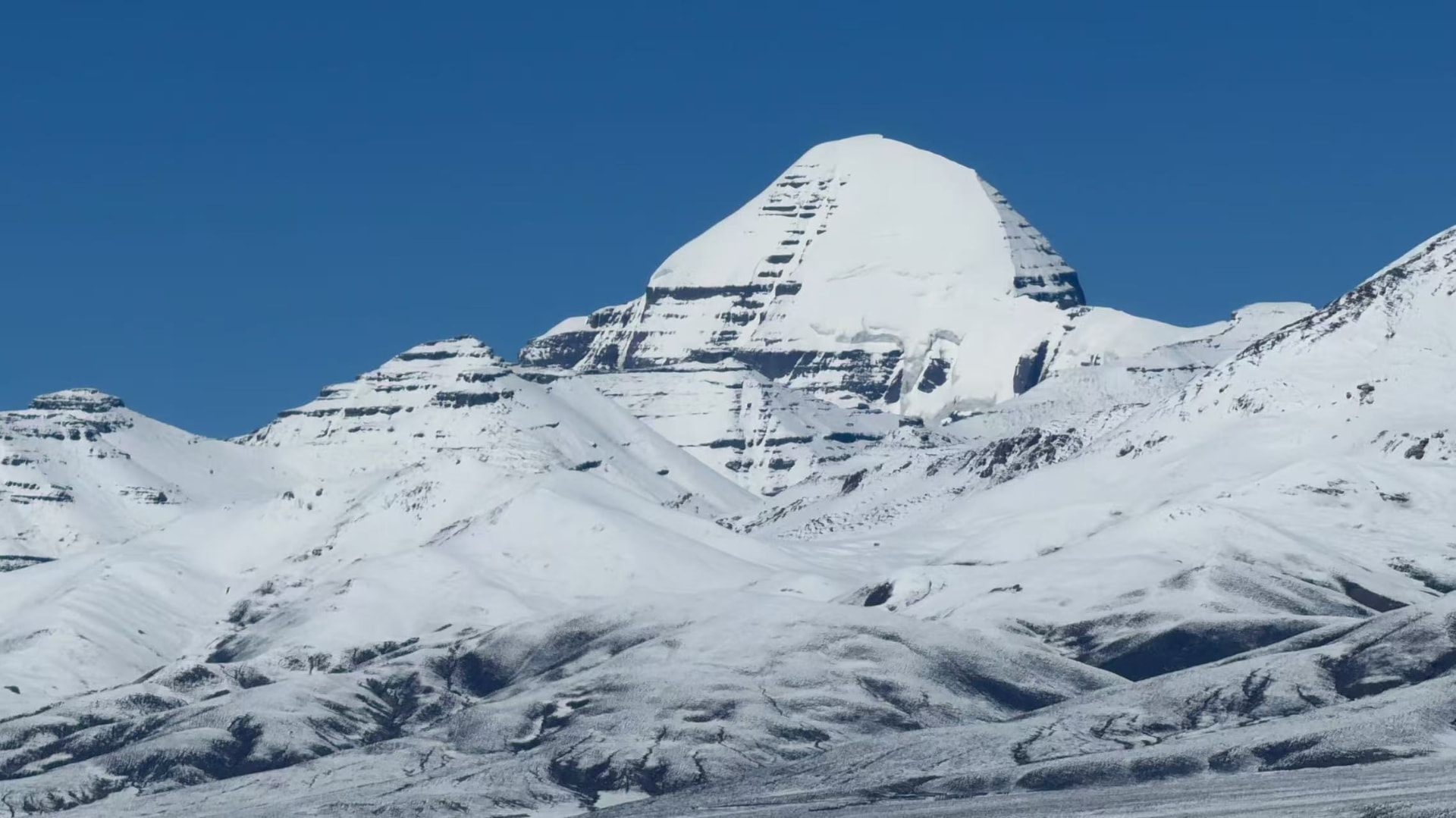
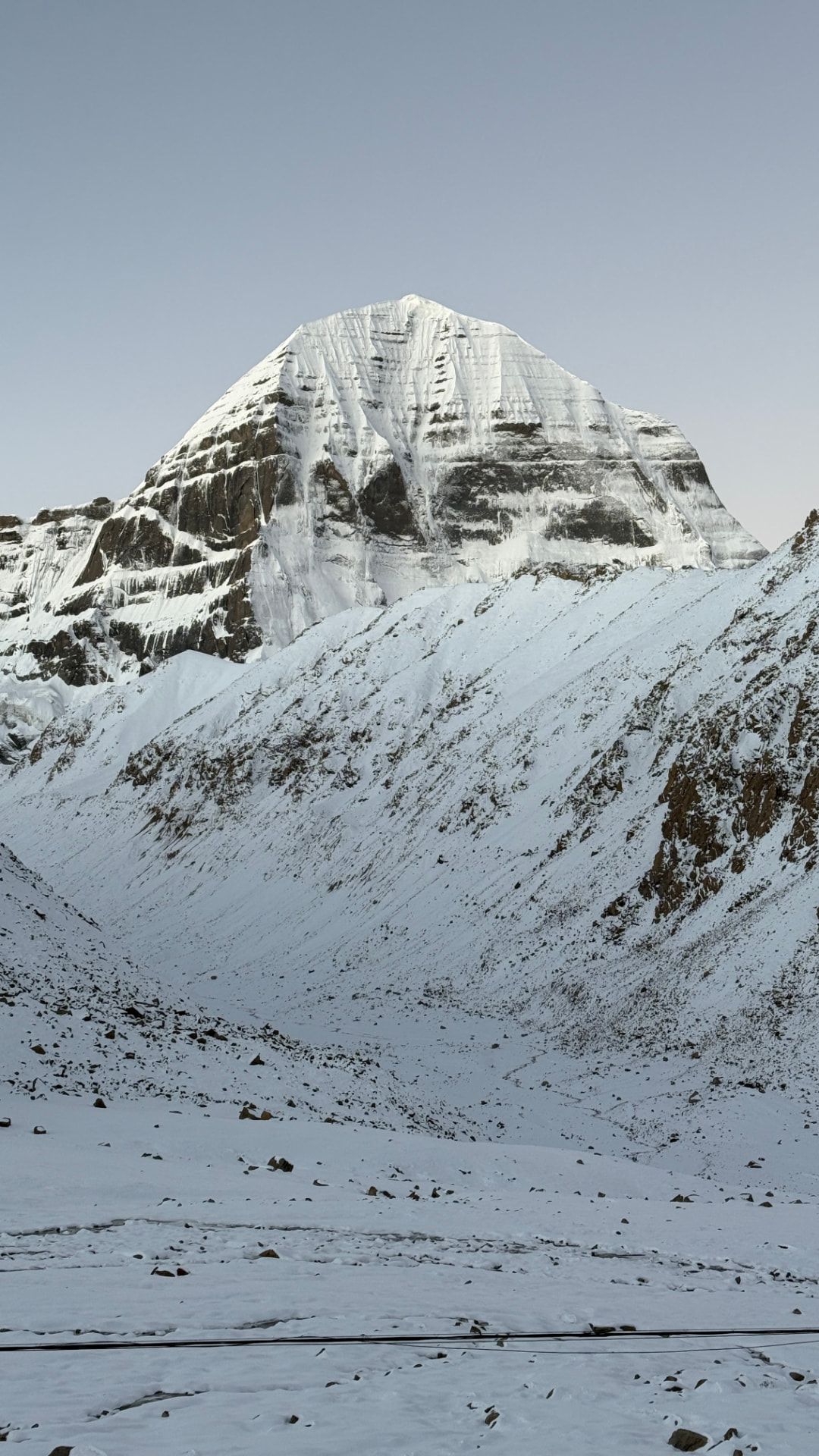
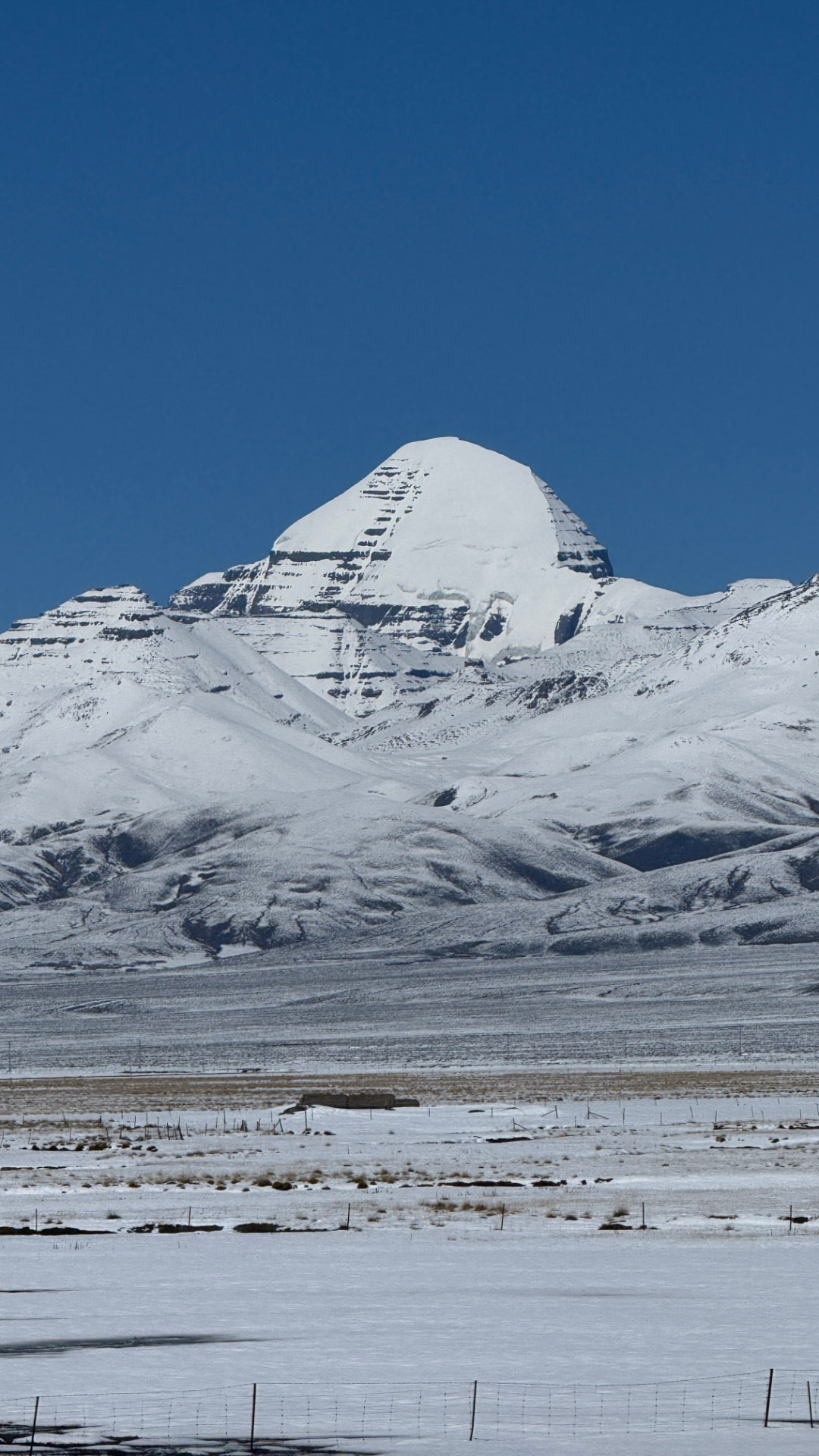
A different journey. The same Kailash.
I'm already looking forward to returning next year. There will probably be different people, different weather, different challenges and different lessons.
A different journey. The same Kailash.
Har Har Mahadev.